AI isn’t just writing essays and generating weird cat photos. Behind the scenes, it’s quietly sneaking into places that feel surprisingly human: music, cities, sports, creativity, even your sense of “taste.” If you’re a tech enthusiast, this isn’t just cool—it’s a whole playground of strange, clever experiments happening in real time.
Let’s walk through five genuinely interesting ways AI is evolving that go way beyond “it can chat” and “it can code.”
1. AI Is Learning Personal Taste (Way Beyond “Recommendations”)
Streaming platforms used to be pretty basic: “You watched this, so you might like that.” Now, AI systems are moving closer to building a rough model of your actual taste—context, mood, and all.
Modern recommendation systems look at things like time of day, device, skip rate, and even how quickly you scroll past something. Watch cooking shows at night, but only on weekends? Your recommendations can adapt to that pattern. Some platforms test millions of micro-variations—thumbnails, descriptions, suggested order—just to figure out what you’re likely to click right now, not just “in general.”
What’s interesting here is where this is headed: AI that doesn’t just recommend content, but understands why you’re into it. That opens doors to:
- Playlists based on your “focus mode” versus “I’m done with today” mood
- News feeds that adjust if you’re doomscrolling too much and start surfacing lighter content
- Shopping sites that stop suggesting stuff that feels “off-brand” for you
It’s still imperfect and often creepy, but the idea of AI building a rough profile of your aesthetic and emotional preferences is where things are rapidly moving.
2. Sports Teams Are Hiring AI as a (Very Quiet) Assistant Coach
AI in sports used to mean fancy spreadsheets and slow-motion replays. Now it’s inching toward “assistant coach” status.
Teams and leagues are using AI to:
- Analyze player movements frame-by-frame to spot tiny inefficiencies
- Simulate different lineups or plays against specific opponents
- Predict injury risks by combining movement data, workload, and medical history
- Break down opponent tactics automatically and surface patterns coaches might miss
This isn’t sci-fi; elite teams across basketball, soccer, baseball, and American football are already doing it. Some use computer vision to track players and ball position, then run models that can answer questions like, “What happens to our scoring chances if this player moves two meters left instead of right?”
The wild part? A lot of this never shows up on TV or social media. You just see a player “suddenly” get better at positioning or a team “randomly” adjust a formation. Behind that, there’s often an AI quietly crunching patterns that are impossible for humans to see in real time.
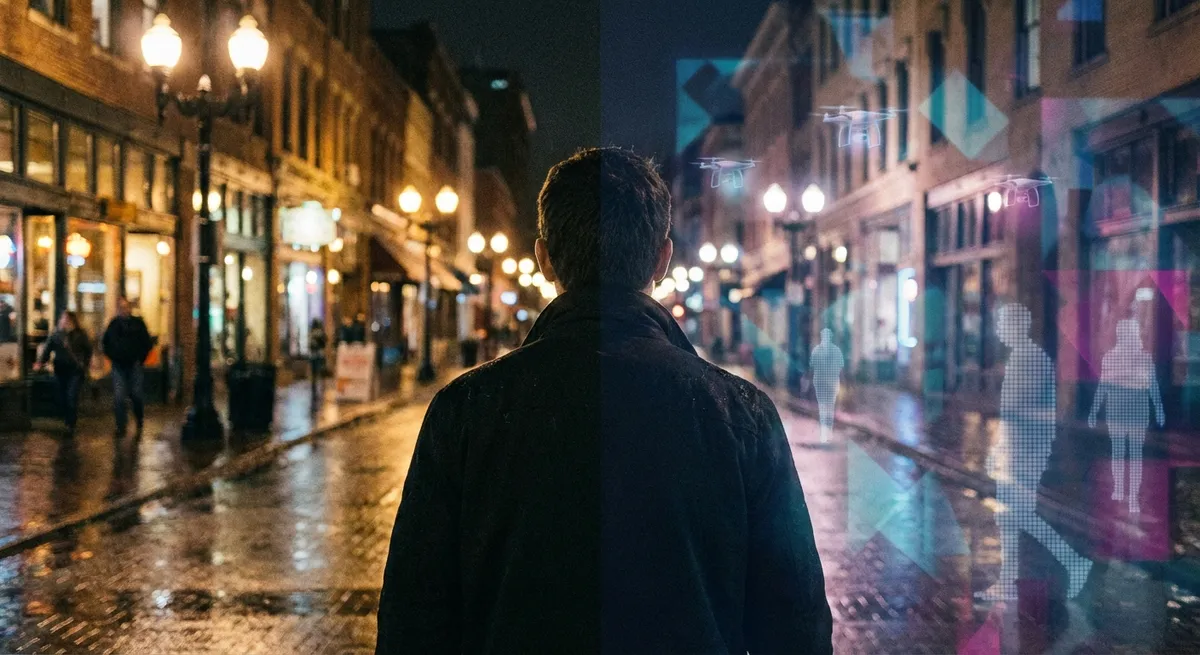
3. Cities Are Starting to Run Little AI Simulations of You
Smart cities aren’t just about faster Wi‑Fi and shiny kiosks. They’re increasingly about AI trying to predict where people go, what they do, and how to keep everything flowing.
With enough data—traffic sensors, public transit usage, power consumption, weather—AI systems can simulate how a city behaves like a giant living thing. Planners and utilities are using that to:
- Adjust traffic lights dynamically based on predicted congestion
- Prepare power grids for heatwaves or peak-demand events
- Optimize bus and train schedules for real (not idealized) usage patterns
- Test “what if” scenarios like closing a major road or adding a bike lane
The fascinating part for tech folks is the scale. These aren’t tiny models running on a laptop; they’re often huge simulations syncing live with sensor networks, satellite imagery, and historical records.
Long term, this could mean cities that adapt in close to real time: rerouting traffic around accidents automatically, pre-cooling buildings during a heat spike, or prioritizing emergency routes during storms. The big tension, of course, is balancing that power with privacy and transparency, which is becoming its own field of AI governance.
4. AI Co‑Creators Are Getting Weirdly Good at Style, Not Just Content
We all know AI can spit out text, images, music, code, and video. But the more interesting trend is that it’s getting better at style—capturing vibe, tone, pacing, and aesthetic details that used to be very human.
Creative tools are shifting from “AI does it for you” to “AI helps you explore 50 ideas in seconds”:
- Video editors that propose different cuts: “emotional version,” “fast-paced version,” “tutorial style”
- Music tools that can keep your melody but suggest alternate harmonies, genres, or moods
- Image tools that iterate on your original sketch rather than overwriting your idea
- Writing tools that help you test different voices: more playful, more serious, more minimal
This isn’t just about productivity. It changes the creative process. You can treat AI like a chaotic brainstorm partner: “What if this scene were moodier? Less color? More retro?” and get instant options to evaluate or remix.
For tech enthusiasts, the big shift is this: AI isn’t just “automating creativity”—it’s becoming a sandbox for exploring possibilities you might not have considered, while still letting you stay in control of the taste and final call.
5. AI Is Getting Better at Explaining Its Weird Decisions
One of the main complaints about AI systems—especially the big, complex ones—is that they’re black boxes. They work… but no one can clearly say why. That’s now a full-blown research area: making AI more explainable.
Researchers and companies are building tools that:
- Highlight which parts of an image a model focused on when making a decision
- Show what words or phrases in text heavily influenced an outcome
- Let humans “probe” a model with small changes to see how its decisions shift
- Generate human-readable explanations like, “This was flagged because of X, Y, and Z”
For things like medical decisions, loans, hiring, and legal risk, this is a big deal. It’s the difference between “the model said no” and “the model said no because your income, debt ratio, and recent missed payments triggered these specific rules.”
From a tech-nerd perspective, it’s also just cool that we’re starting to treat AI systems like complex organisms we can poke, question, and interpret—almost like debugging a brain that we built but don’t fully understand yet.
Long term, explainability is likely to become a core feature, not a bonus. If AI is going to have a say in important decisions, we’ll need to be able to say, in plain language, how it got there.
Conclusion
AI isn’t just a chatbot trend or a coding assistant; it’s quietly rewriting how we handle taste, strategy, cities, creativity, and even trust. The most interesting part isn’t that AI can “do more”—it’s that it’s sliding into roles that used to be purely human: coach, planner, creative partner, critic, explainer.
For tech enthusiasts, this is the moment to stop thinking of AI as a single product category and start seeing it as an underlying layer that will touch almost every system we care about. The experiments happening now—on your screen, in your city, behind your favorite apps—are just the early versions.
If you’re paying attention, it’s a pretty great time to not be bored by tech.
Sources
- [Google Research – Responsible AI and Explainability](https://ai.google/responsibility/explainable-ai/) - Overview of current approaches to making AI systems more interpretable and transparent
- [MIT Technology Review – How AI is changing city planning](https://www.technologyreview.com/2021/11/10/1040015/how-ai-is-changing-city-planning/) - Discusses how AI models are used to simulate and optimize urban environments
- [FIFA – Football Data and Technology in the Game](https://www.fifa.com/football-technology/football-data) - Explains how advanced data and AI-driven analysis are used in modern football (soccer)
- [Spotify Engineering Blog – Machine Learning for Personalization](https://engineering.atspotify.com/2021/01/machine-learning-for-personalization/) - Deep dive into how AI powers personalized music recommendations
- [Stanford HAI – AI and the Future of Creativity](https://hai.stanford.edu/news/how-ai-changing-way-we-create) - Explores how AI tools are reshaping creative work across different fields
Key Takeaway
The most important thing to remember from this article is that this information can change how you think about AI.